As student expectations evolve and campuses adapt to new challenges, the traditional model of campus dining is being reimagined. Today’s institutions must balance convenience, cost efficiency, and student well-being. Micro markets and smart vending solutions are emerging as powerful tools to meet these demands, offering flexible, 24/7 food access while supporting student success.
The Changing Landscape of Campus Dining
Students have busy, non-traditional schedules. Between classes, work, athletics, and social commitments, students often look for food outside of traditional dining hall hours. At the same time, students expect digital-first, seamless experiences similar to retail environments they encounter off-campus.
Educational Institutions are also under pressure to control operating costs while maintaining high-quality offerings. These factors are driving innovation in how food is accessed, purchased, and consumed across campuses.
Food Insecurity: A Critical Challenge
One of the most pressing issues in higher education today is food insecurity. Studies show that approximately 40% of college students experience some level of food insecurity, whether financial or accessibility-related. Student groups that are especially vulnerable include first- generation students, student-athletes, non-traditional students, and Pell Grant recipients.
Food insecurity has serious consequences. Without reliable access to adequate nutrition:
- Academic performance declines
- Dropout risk increases
- Graduation outcomes suffer
Addressing this issue is not just a matter of convenience—it is foundational to student success.
Technology as Part of the Solution
Institutions are increasingly leveraging smart vending technology to support food-insecure students. By integrating campus card systems, schools can provide targeted meal credits, enable access through cashless transactions, and ensure food benefits are used for their intended purpose.
These solutions improve both accessibility and dignity, enabling students to access food when and where they need it.
What Are Micro Markets?
Micro markets are self-service retail spaces that bring a modern, open-concept approach to campus dining. Unlike traditional vending machines, they offer fresh meals, snacks, and beverages, open shelving and refrigerated displays, self-checkout kiosks, and 24/7 availability.
This format allows users to browse products freely, creating a more engaging and retail-like experience.
Key Advantages of Micro Markets
Micro markets provide several benefits over traditional dining and vending options:
- Expanded variety, including fresh and healthy items
- Enhanced convenience with grab-and-go access
- Cashless and mobile payment compatibility
- Reduced labor requirements
- Extended dining access beyond standard hours
They effectively bridge the gap between a full dining hall and a vending machine, offering both quality and accessibility.
Smart Vending: Compact and Efficient
Smart vending machines represent another evolution in food service. These automated systems are ideal for smaller or high-traffic locations where space and staffing are limited.
Key features include:
- Touchscreen interfaces
- Temperature-controlled storage
- Real-time inventory tracking
- Secure, enclosed dispensing systems
- Cashless and mobile payment options
Unlike traditional vending, smart vending allows multiple-item purchases in a single transaction, improving efficiency and user experience.
Comparing Micro Markets and Smart Vending
While both solutions enhance food access, they serve different needs:
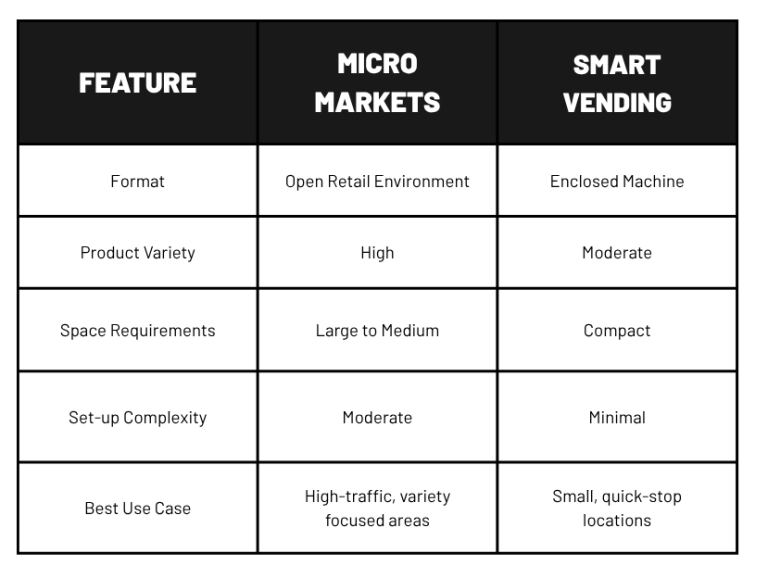
Micro markets are ideal for creating a “store-like” experience, while smart vending excels in convenience and scalability.
Meeting the Expectations of the Next Generation
As Generation Alpha begins entering college, their expectations will further shape campus dining. These students value:
- Transparency in food sourcing
- Convenience and speed
- Health-conscious yet practical options
- Digital and interactive experiences
- Dining as an experience, not just sustenance
Micro markets and smart vending align well with these preferences, offering both personalization and flexibility.
Supporting a Holistic Campus Dining Strategy
To maximize impact, institutions should view micro markets and smart vending as part of a broader dining ecosystem. When integrated effectively, they can:
- Complement existing dining halls
- Integrate with meal plans
- Promote healthy, fresh-forward options
- Keep student spending on campus
This holistic approach ensures that all students—regardless of schedule or financial situation—have access to nutritious food.
The Future of Campus Dining
The future of campus dining is flexible, technology-driven, and student-centered. Micro markets and smart vending provide innovative solutions to some of the most pressing challenges in higher education, from food insecurity to evolving student expectations.
By embracing these models, institutions can create inclusive, accessible, and modern dining environments that support not only convenience but student success.
Want to discuss options for your campus?
Click on the button below to reach out.