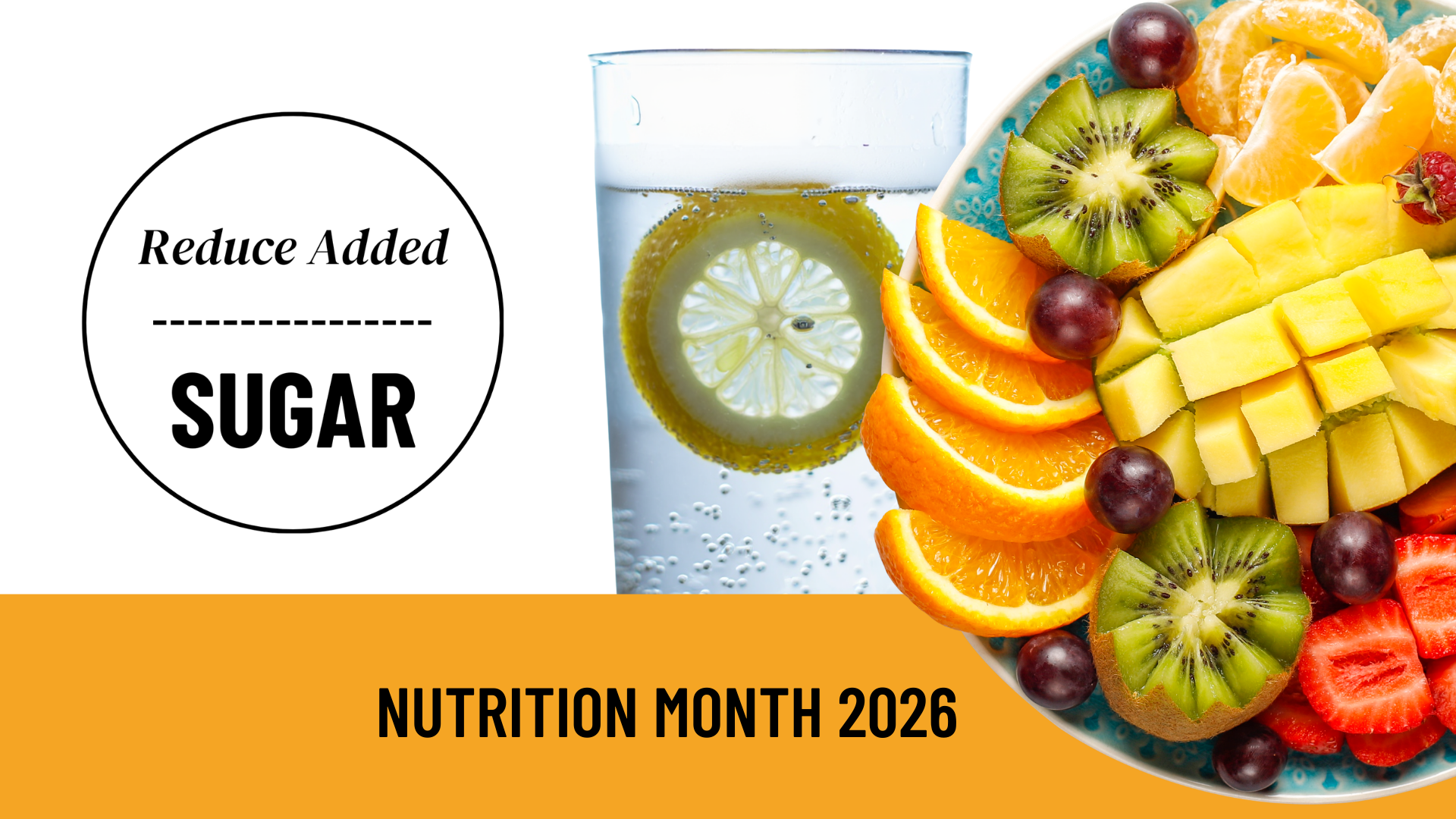
March is Nutrition Month—a perfect time to take a closer look at what’s on your plate (and in your cup). One of the simplest and most effective ways to boost your health is by reducing added sugar, which sneaks into more foods than you might expect.
Some sugar occurs naturally in foods like fruit, plain yogurt, and milk. These natural sugars come packaged with nutrients your body needs—fiber, vitamins, and minerals. It’s the added sugars—those stirred in during processing or preparation—that can add up quickly and impact your health.
According to the American Heart Association, daily added sugar should be limited to:
- 36 grams for men
- 25 grams for women
And Harvard Health reminds us:
“For most people, consuming natural sugars in foods such as fruit is not linked to negative health effects, since the amount of sugar tends to be modest and is ‘packaged’ with fiber and other healthful nutrients.”
This Nutrition Month, try these simple swaps to cut back on added sugar—without cutting out flavor or satisfaction.
1. Naturally Sweet, Naturally Better
Choose natural sugar over added sugar
Naturally occurring sugars—like lactose in milk or fructose in fruit—come with nutritional benefits. Added sugars? Not so much. These are sugars added during cooking, processing, or preparation, and they can stack up fast.
Sugar-Smart Swaps
- Swap processed sweets → whole fruits
Fresh fruit satisfies your sweet tooth and adds fiber.
- Swap flavored varieties → unsweetened applesauce or yogurt
Add your own fruit for sweetness without the hidden sugar.
Watch Out For
- Flavored yogurts: Many flavored Greek yogurts contain 7–15g of added sugar per cup.
- Granola mixes: Some granolas pack up to 20g of added sugar per serving.
2. Rethink Your Drink
Choose naturally infused water and low-sugar beverages
Beverages are one of the biggest sources of added sugar. The good news? A simple swap can make a big difference.
Sugar-Smart Swaps
- Swap soda or sugary juices → infused water or unsweetened tea
Add berries, citrus, cucumber, or mint for natural flavor.
- Swap flavored creamers → plain cream or half-and-half
You’ll get the richness without the syrupy sugar load.
Watch Out For
- Store-bought smoothies: Many contain 30–40g of sugar—more than a dessert.
- Specialty coffee drinks: A typical Grande Caramel Frappuccino can have 46g+ of sugar.
3. Half It!
Cut your added sugar in half—still enjoy the flavor you love
If completely removing added sugar feels impossible, start smaller. Even cutting back by half helps reduce overall sugar intake.
Try using:
- Half the creamer in your coffee
- Half the ketchup on your plate
- Half the dressing on your salad
Small steps lead to big health wins.
Sugar-Smart Swaps
- Swap sweet condiments → lower-sugar alternatives
Try Dijon mustard, balsamic vinegar, lemon and olive oil, pesto, or spices.
- Swap candied toppings → plain nuts, seeds, berries, or crispy chickpeas
More crunch, less sugar.
Watch Out For
- Packaged overnight oats: Can contain up to 10g of added sugar
- Protein bars: Some hide 15g of added sugar
- High-protein/high-fiber cereals: Up to 10g per ¾ cup—check the label
- Salad dressings: Look for options with 2g or less of sugar per serving
Make Nutrition Month Count
Reducing added sugar doesn’t have to mean giving up the foods you love. With a few mindful swaps, you can nourish your body, balance your energy, and stay satisfied—all while staying within recommended daily limits.
Small changes. Big impact.
Here’s to feeling your best this Nutrition Month and beyond!
Are you ready to make a big impact on your school or corporate dining program? Contact us to discuss the possibilities.